
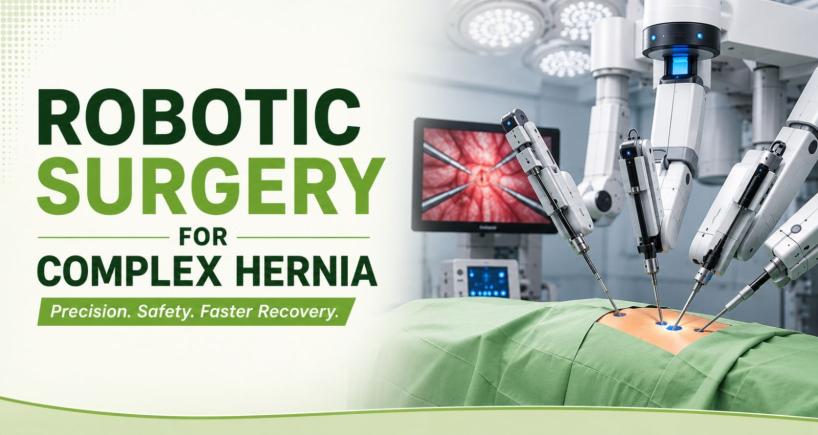


Robotic Surgery for Complex Hernia
Complex hernias can be challenging to treat and often require advanced surgical expertise. With the evolution of medical technology, robotic-assisted surgery has emerged as a highly effective and precise treatment option. This minimally invasive approach is transforming outcomes for patients with complex hernias by offering faster recovery and reduced complications.
What is Complex Hernia?
A hernia occurs when an internal organ pushes through a weak spot in the muscle or tissue. A hernia is considered complex when:
• It is large or recurrent
• It has occurred after previous surgery
• It involves multiple defects
• It is associated with complications like infection or obstruction
Such cases require specialized surgical planning and advanced techniques.
Why Choose Robotic Surgery for Complex Hernia?
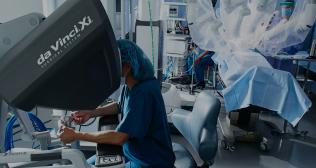
Robotic-assisted surgery provides surgeons with enhanced precision, flexibility, and control compared to traditional methods. It is especially beneficial in complex hernia cases where accuracy is critical.
Key advantages include:
• Smaller incisions and minimal scarring
• Less post-operative pain
• Reduced blood loss
• Faster recovery and shorter hospital stay
• Lower risk of complications and recurrence
How Robotic Hernia Surgery Works?
In robotic surgery, the surgeon controls robotic arms equipped with high-definition 3D visualization and precision instruments. This allows for:
• Better identification of tissue layers
• Accurate mesh placement
• Improved suturing in difficult areas
This level of precision is particularly useful in treating recurrent and large hernias.
Who is the Right Candidate?
Robotic surgery is ideal for patients with:
• Recurrent hernias
• Large abdominal wall hernias
• Incisional hernias after previous surgeries
• Patients seeking faster recovery and less pain
However, the suitability depends on individual medical conditions and requires expert evaluation.
When to See a Doctor?
Common symptoms of hernia include:
• Visible bulge in the abdomen or groin
• Pain or discomfort, especially while lifting or bending
• Heaviness or pressure in the abdomen
• Symptoms worsening over time
Early consultation can prevent complications such as strangulation or obstruction.
At Fortis Hospital Manesar, Dr. Rakesh Kumar specializes in the diagnosis and advanced minimally invasive as well as robotic-assisted treatment of complex hernias, ensuring less pain, minimal blood loss, faster recovery, and improved surgical precision for better patient outcomes.
Takeaway
Robotic surgery is revolutionizing the treatment of complex hernias by offering a safer, more precise, and patient-friendly approach. Early diagnosis and expert care are essential to avoid complications and ensure long-term success.
📍 For expert robotic hernia surgery in Manesar, consult Dr. Rakesh Kumar at Fortis Hospital Manesar.
Categories
Clear allMeet the doctor

- General Surgery | General and Laparoscopic Surgery | Robotic Surgery | General and Minimal Access Surgery
-
 24 Years
-
 1000
1000
Related Blogs
View all
Single Incision Laparoscopic Surgery (SILS) for Hernia Repair

Understanding Gallbladder Stones: Causes, Symptoms, and Treatment Options

Understanding Hernia - Causes, Symptoms, and Treatment Options

Gallstone Complications: When to Seek Medical Attention

Common Myths and Misconceptions About Bariatric Surgery

Understanding Appendicitis: Causes, Symptoms, Risk Factors & Treatment
Understanding Varicose Veins: Causes, Symptoms, Risk Factors & Treatment Options

FAQs
Is robotic surgery safe for complex hernia?
Yes, robotic surgery is considered safe and highly effective, especially for complex and recurrent hernias. It offers better precision and reduces the risk of complications.
What is the recovery time after robotic hernia surgery?
Most patients recover faster compared to open surgery, with many resuming normal activities within a few weeks, depending on the complexity of the case.
Is robotic surgery better than laparoscopic surgery?
Both are minimally invasive, but robotic surgery provides enhanced 3D visualization and precision, making it more suitable for complex hernia cases.
Will there be scars after robotic hernia surgery?
Robotic surgery involves small incisions, resulting in minimal scarring compared to traditional open surgery.
Can a complex hernia come back after surgery?
While no surgery guarantees zero recurrence, robotic-assisted surgery significantly reduces the chances due to precise mesh placement and repair techniques.

Keep track of your appointments, get updates & more!

